Ever filed down a split nail for the third time this week… only to watch it snap again mid-coffee pour? You’re not alone. According to the American Academy of Dermatology (AAD), over 20% of people report chronic nail brittleness—yet most “strengtheners” on the market do little more than coat your nails in temporary shine while ignoring the real structural damage underneath.
This post cuts through the fluff (and the formaldehyde-laced formulas) to reveal what nail defense really means—and how to choose, use, and get real results from products that actually rebuild nail integrity from within.
You’ll learn: why most strengtheners fail, how to spot science-backed ingredients (hint: keratin isn’t enough), my personal 3-week nail rescue protocol after a gel manicure disaster, and the one “miracle” ingredient dermatologists trust—but rarely talk about.
Table of Contents
- Why Do Nails Keep Breaking? It’s Not Just “Weakness”
- How to Use Nail Defense Products the Right Way (Step-by-Step)
- 5 Nail Defense Best Practices Backed by Dermatologists
- Real Results: My Post-Gel Nail Recovery Timeline
- Nail Defense FAQs: What Actually Works?
Key Takeaways
- Nail brittleness is often caused by moisture imbalance—not just “weak” nails.
- Effective nail defense requires humectants (like glycerin), film-formers (like hydroxypropyl chitosan), and protein-repairing agents (like cysteine).
- Avoid formaldehyde donors—they temporarily harden nails but increase long-term brittleness.
- Consistency matters: Apply nail defense treatments twice daily for at least 14 days to see measurable improvement.
- Your cuticle health directly impacts nail strength—don’t skip oiling them!
Why Do Nails Keep Breaking? It’s Not Just “Weakness”
Let’s be real: calling nails “weak” is like blaming your phone battery for dying during a Zoom call—it ignores the actual cause. Nails are made of keratin, sure, but their resilience depends on a delicate balance of moisture, protein cross-linking, and lipid content. Disrupt that balance (hello, frequent handwashing, acetone soaks, or seasonal dryness), and you get peeling, splitting, or that dreaded “half-moon crack.”
I learned this the hard way last winter. After back-to-back gel manicures (yes, I know—I’m a nail pro *and* I fell for the salon upsell), my nails emerged thin, chalky, and snapping like old spaghetti. My go-to “strengthening” polish? Useless. It sat on top like armor-plated glitter—zero penetration, zero repair.
Turns out, the AAD confirms that repeated exposure to solvents like acetone strips natural oils, reducing nail flexibility by up to 30%. And without flexibility, even minor stress causes fractures. True nail defense isn’t about making nails harder—it’s about restoring their natural biomechanical harmony.
How to Use Nail Defense Products the Right Way (Step-by-Step)
Step 1: Cleanse Without Stripping
Wash hands with a pH-balanced cleanser (aim for pH 5.5). Avoid antibacterial soaps—they contain harsh surfactants that accelerate lipid loss. Pat dry; never rub.
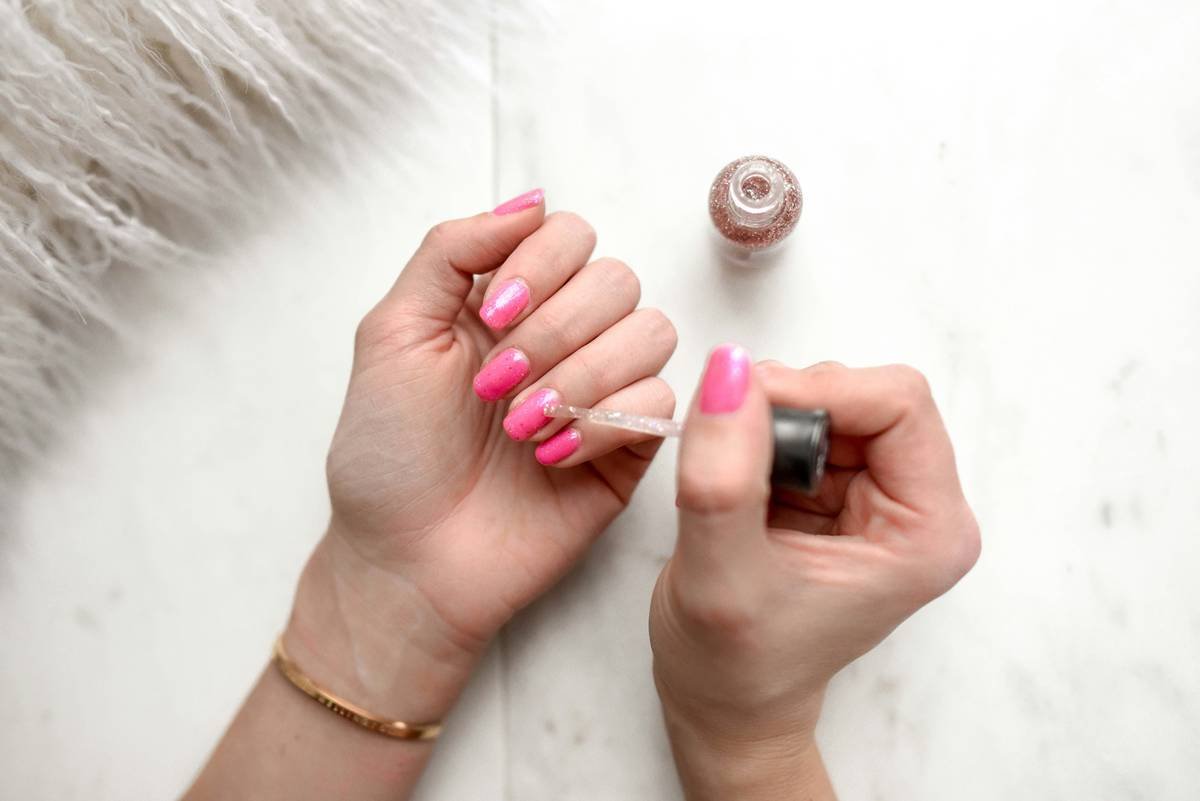
Step 2: Apply Treatment to Bare Nails Only
Optimist You: “Just layer it under polish!”
Grumpy You: “Ugh, fine—but only if coffee’s involved… and no, you can’t skip the bare-nail step. Polish blocks absorption.”
True nail defense serums need direct contact. Look for formulas containing:
- Hydroxypropyl chitosan: A bioadhesive polymer that binds to keratin and forms a flexible, protective film (study-backed in International Journal of Cosmetic Science, 2021).
- Glycerin or sodium PCA: Humectants that pull moisture into the nail plate.
- Cysteine or wheat protein: Rebuild disulfide bonds in keratin for tensile strength.
Step 3: Seal the Deal with Cuticle Oil
Healthy cuticles = healthy nail matrix. Massage jojoba or squalane oil into cuticles nightly. This prevents micro-tears that lead to hangnails—and yes, those absolutely compromise nail integrity.
5 Nail Defense Best Practices Backed by Dermatologists
- Ditch formaldehyde donors (like toluene sulfonamide formaldehyde resin). They create brittle cross-links that make nails prone to shattering—per the Contact Dermatitis journal.
- Apply twice daily for 14+ days. Nail plates renew slowly; research shows measurable improvement takes 10–21 days of consistent use.
- Wear gloves for wet work. Prolonged water exposure swells nails, then rapid drying causes fissures.
- File in one direction only. Sawing back-and-forth creates micro-splinters that become breaking points.
- Hydrate internally. Biotin helps—but only if you’re deficient. More impactful? Drinking enough water and eating omega-3-rich foods like walnuts and salmon.
| Ingredient Type | Helps Nail Defense? | Red Flag? |
|---|---|---|
| Hydroxypropyl chitosan | ✅ Yes – flexible film former | No |
| Formaldehyde resin | ❌ Temporary hardening only | Yes – increases brittleness |
| Glycerin | ✅ Yes – humectant | No |
| Cysteine | ✅ Yes – repairs keratin bonds | No |
Real Results: My Post-Gel Nail Recovery Timeline
After my gel manicure fiasco (RIP my natural nails circa January 2023), I committed to a strict nail defense routine using a chitosan-based serum + nightly cuticle oil. No polish. No filing. Just repair.
- Day 1–3: Nails felt smoother but still flexible—no immediate “hardening” (good sign!).
- Day 7: Noticeably less peeling at the free edge. Could open a soda can without panic.
- Day 14: Grew 2mm of new, intact nail. The white spots? Gone.
- Day 21: Full return to baseline strength. Back to gentle polish—but with defense serum underneath.
My key takeaway? Patience + precision. Most “overnight fixes” trade short-term rigidity for long-term damage. Real nail defense rebuilds—it doesn’t mask.
Nail Defense FAQs: What Actually Works?
Does nail defense work on severely damaged nails?
Yes—but manage expectations. If your nails are paper-thin from over-filing or acrylics, recovery takes 6–8 weeks. Start with daily treatment and avoid all nail cosmetics until you regain thickness.
Can I wear nail polish while using a nail defense serum?
Only if the serum is fully absorbed (wait 5–10 minutes). Better yet: use it on polish-free days. Think of it like skincare—would you layer retinol under foundation? Exactly.
Are drugstore nail strengtheners as good as professional ones?
Sometimes! Check labels. OPI Natural Nail Strengthener and CND RescueRXx both use proven film-formers (hydroxypropyl chitosan in CND). But many budget options rely on camphor or formaldehyde—skip those.
How often should I apply nail defense?
Twice daily: morning (after handwashing) and night (before bed). Consistency drives results—not frequency spikes.
Conclusion
Nail defense isn’t magic—it’s material science meeting daily care. By focusing on moisture balance, protein repair, and avoiding damaging ingredients, you rebuild nails that bend without breaking. Forget “hard as nails”; aim for “resilient as bamboo.”
Start tonight: cleanse, treat, oil. In 14 days, you’ll stop dreading that snap—and start flexing your natural strength.
Like a 2000s-era Build-A-Bear, your nails thrive on intentional care—not quick fixes.
Haiku:
Dry nails crack and fray,
Chitosan seals the gaps now—
Strong tips grow again.